
Hunsung Lee

Annie Talvasto
Platform Engineering
Cloud Native
Upbound’s latest platform updates create a more predictable, cohesive control plane—aligning navigation, usage-based pricing, and self-service licensing to reduce friction and support AI-driven operations.
AI-native infrastructure requires predictability, not just programmability. This post highlights how recent Upbound updates unify navigation, simplify billing and licensing, and reduce operational friction as platforms scale.
Laying the Operational Foundation for AI-Native Infrastructure
AI is changing how platforms are built, but infrastructure still breaks when humans remain the bottleneck.
As organizations move toward agentic automation and AI-driven operations, the infrastructure layer must become more than programmable. It must be predictable, coherent, and machine-friendly, capable of translating intent into execution without friction. That’s the mission behind Upbound’s Intelligent Control Plane.
Over the past few months, we’ve shipped significant improvements across navigation, onboarding, billing, and licensing. Individually, each removes friction. Together, they create a unified operational experience that aligns how users, and increasingly AI systems, explore the platform, adopt capabilities, and pay for real usage.
At the core is a simple principle: platform teams want fewer surprises, clearer mental models, and tighter feedback loops between usage and cost. Everything we shipped moves in that direction.
In this post, we’ll walk through how these changes create a more seamless Upbound experience, from first click to real usage, and why that matters as infrastructure enters the AI-native era.
What This Means in Practice
For new users, this reduces time-to-orientation. Exploration no longer fragments across marketing pages, docs, and product surfaces. The platform presents a single, coherent mental model from first visit through first deployment, with clear signals about what exists, how it connects, and when value begins.
For existing customers, this tightens the feedback loop between action and outcome. Navigation stays consistent as usage grows, costs map directly to real activity, and upgrades or licenses can be managed without handoffs or ambiguity. The platform behaves predictably as scale and complexity increase.
One Upbound, Everywhere
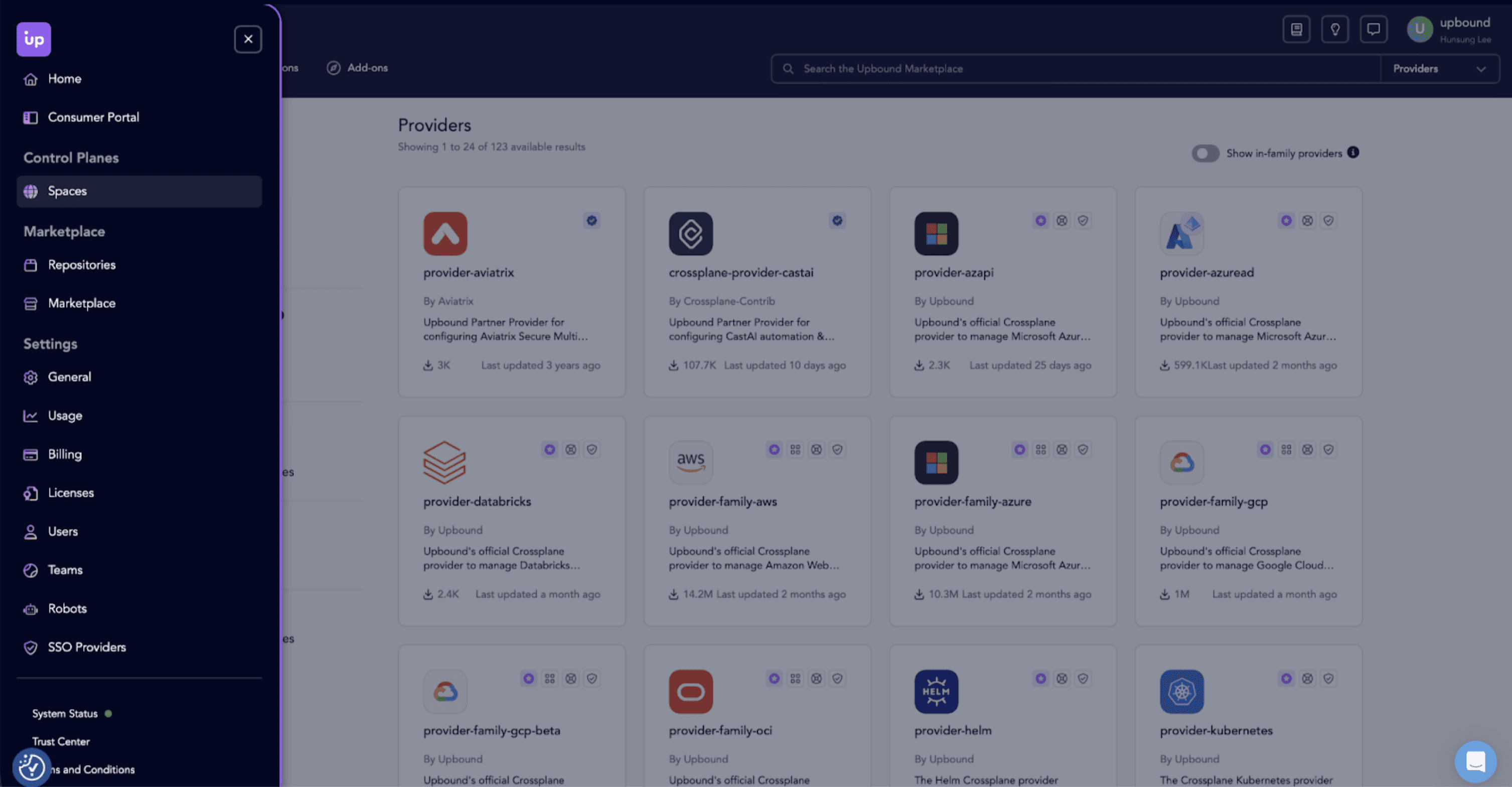
Upbound now delivers consistent global navigation across our marketing site, documentation, Console, Marketplace, and account management. Whether a user is logged in or just exploring, the structure and behavior of the experience remains familiar.
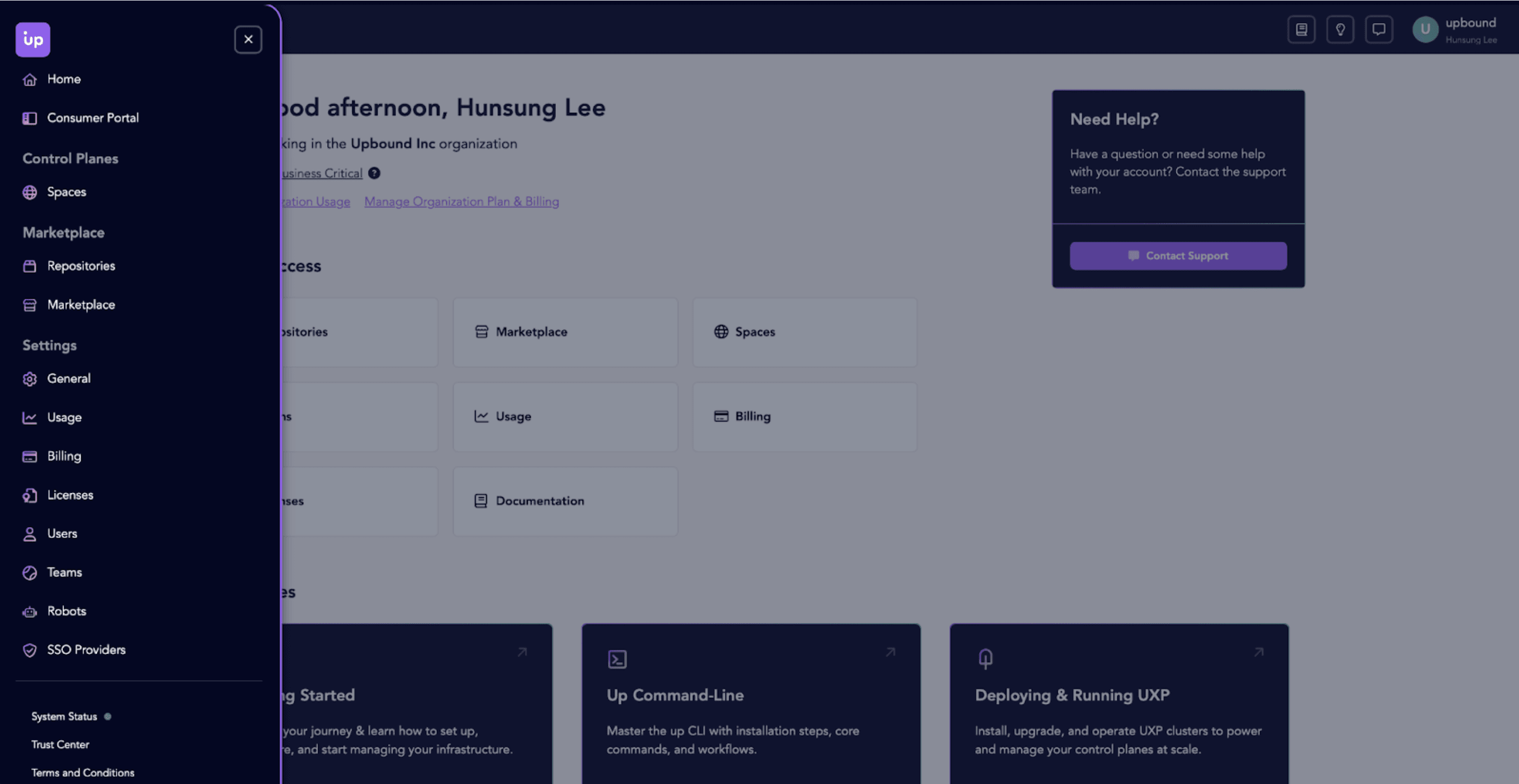
This matters because as users, you no longer think in terms of “products” or “sites.” You can simply think in terms of tasks. By unifying navigation and account context across all surfaces, Upbound reduces cognitive overhead and makes it easier to move from learning to doing without re-orienting at every step.
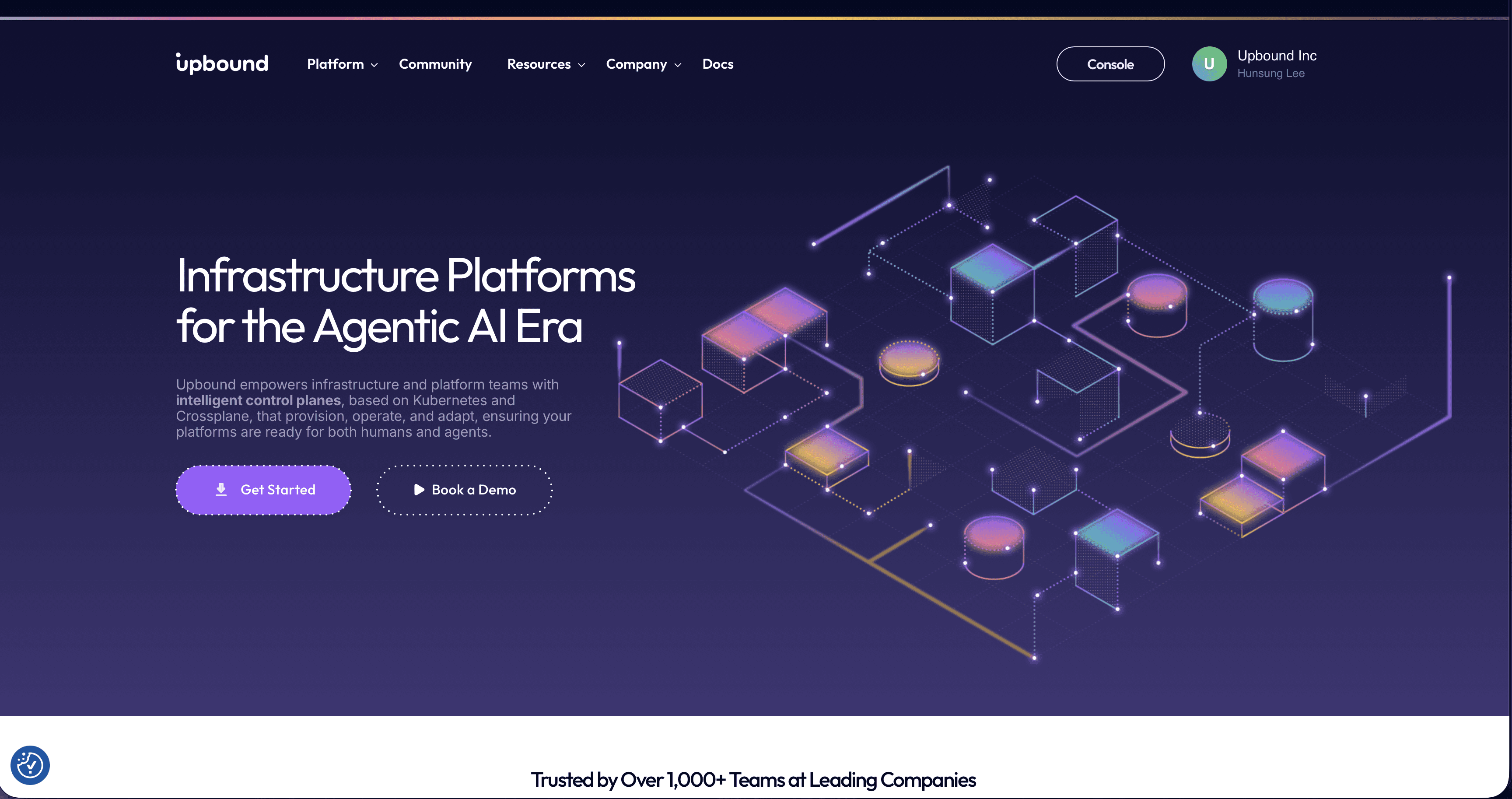
The same principle extends to contextual account awareness. Logged-in users can now see and switch organizations directly from marketing pages, aligning the pre-login and post-login experience into a single, continuous flow.
A Clearer Path from Adoption to Value
As teams adopt Upbound, they often start on the Community tier of UXP2.0 and grow usage organically, upgrading to Standard only when increased usage makes the value clear. Get started by reading our documentation on UXP 2.0 and signing up for an account.
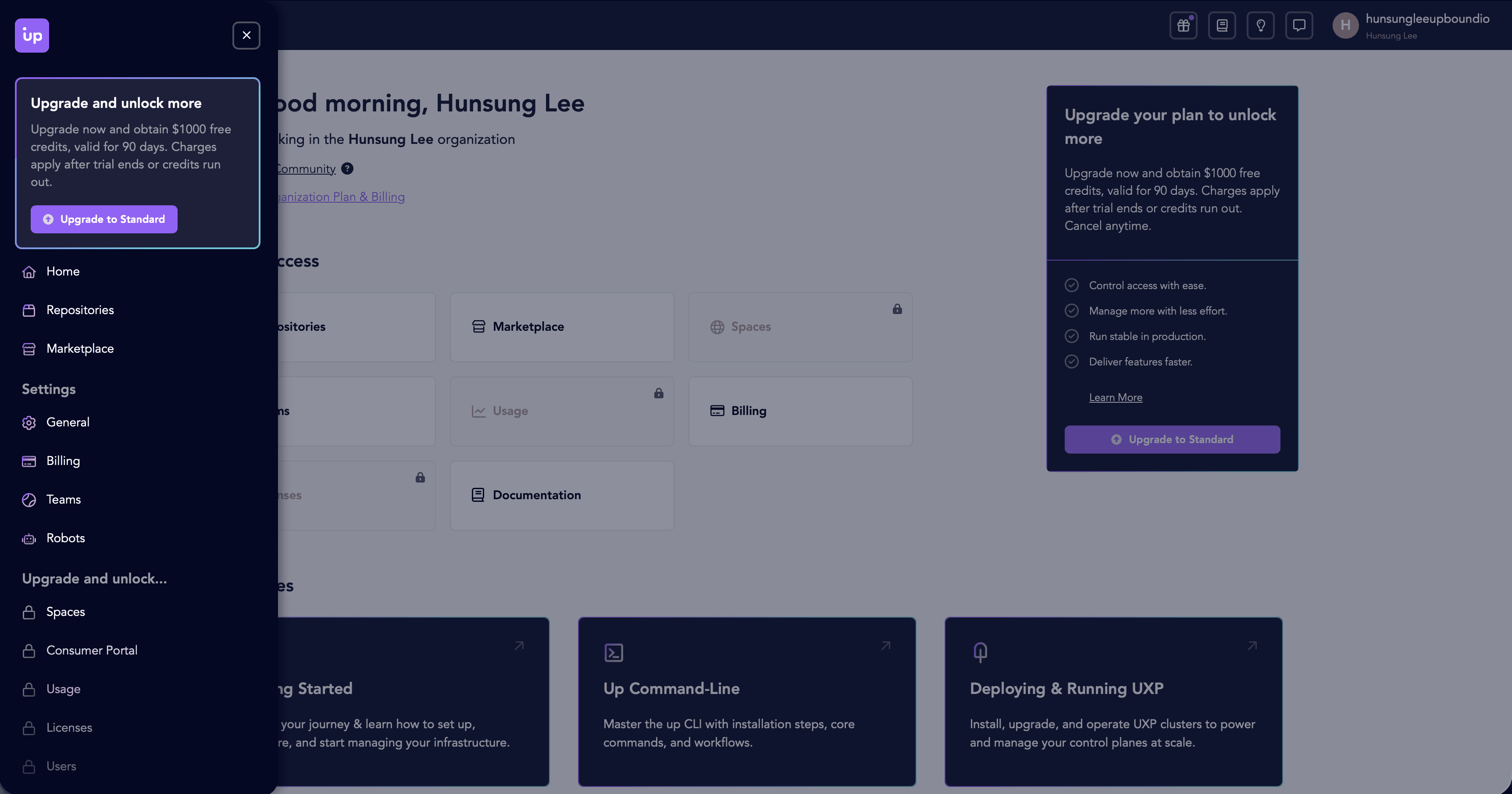
Community users can now upgrade directly to Standard with a simple click of a CTA in our console and immediately access paid features, with billing based on actual consumption rather than static bundles.
Billing is handled entirely through Stripe, simplifying payment management while ensuring security and transparency. The result is a model that feels closer to infrastructure usage itself: flexible and predictable.
Usage-Based Pricing That Reflects Real Work
At the core of the new pricing model are two intuitive metrics: resource-months and operations. Instead of abstract licensing tiers, customers pay for the resources they run and the operations they execute.
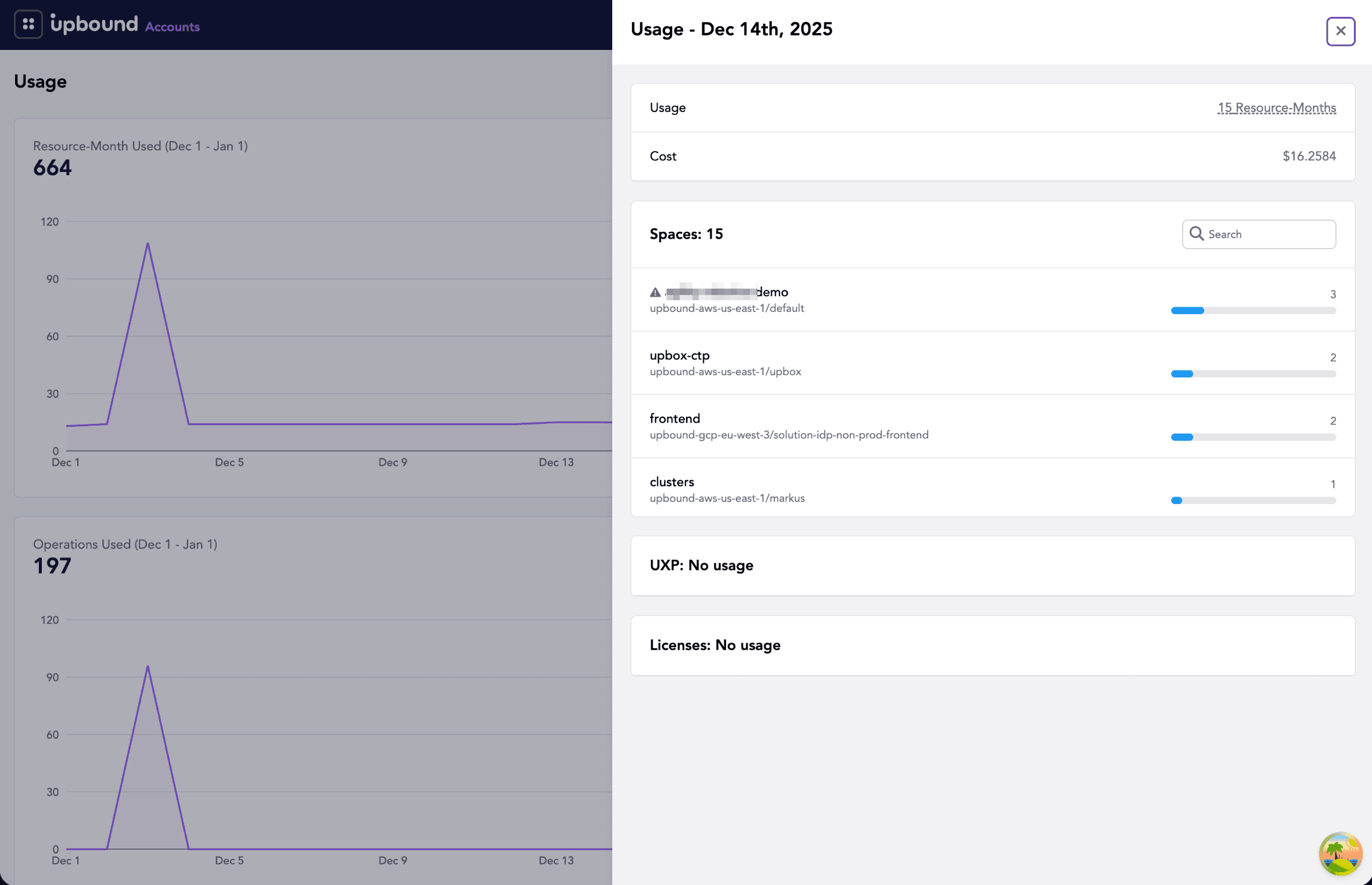
This model applies consistently whether customers are running connected cloud control planes or operating in more constrained environments. It creates a shared language between platform engineers, finance teams, and leadership – one that ties platform activity directly to business impact.
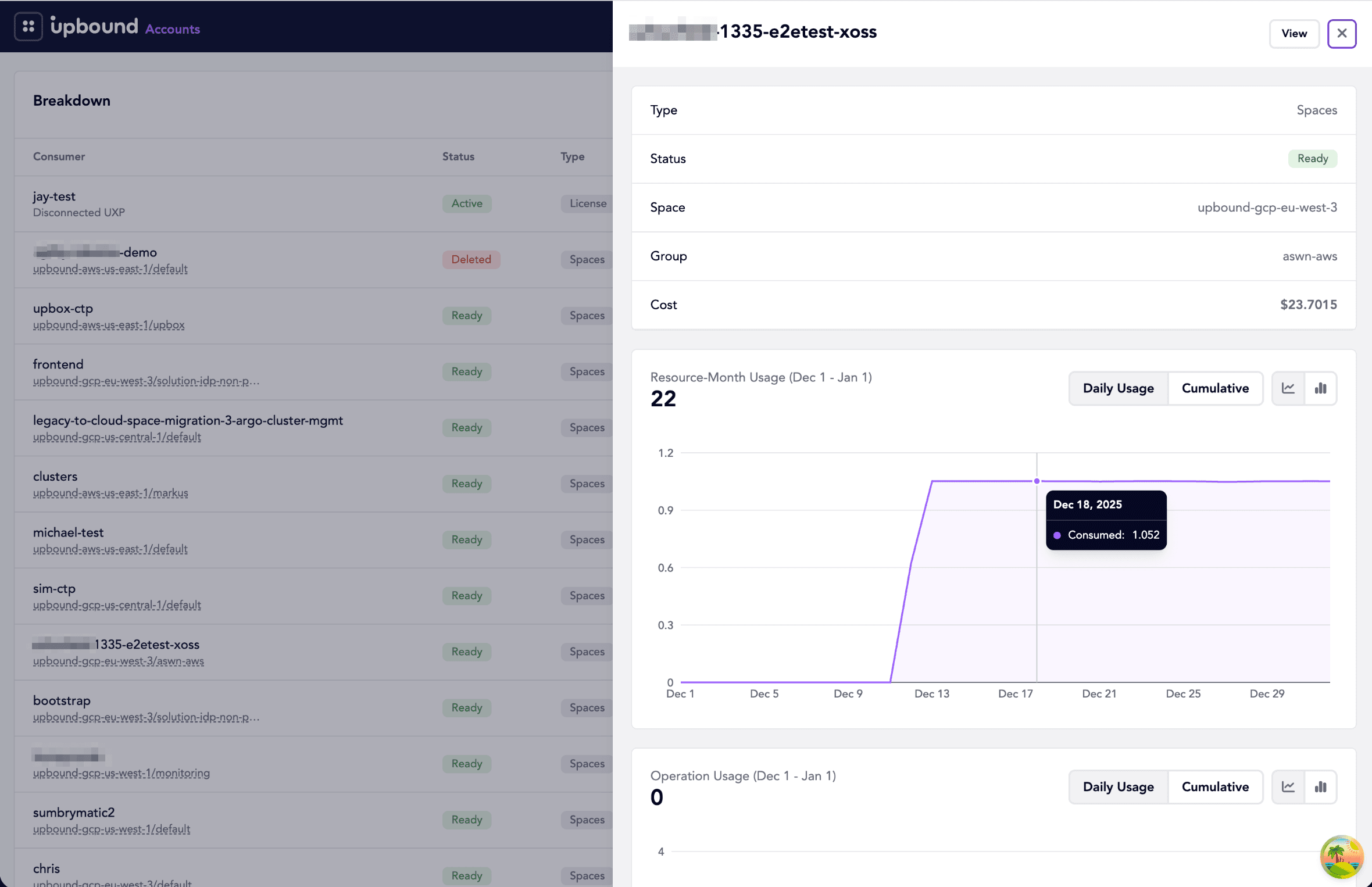
Usage is surfaced clearly through live and daily graphs, giving teams continuous visibility into how resources and operations translate into cost. A deeper overview of how usage is metered, aggregated, and billed is available in our pricing page and documentation.
Enterprise-Ready Licensing, Without the Friction
For enterprise and business-critical customers running self-hosted or air-gapped environments, Upbound introduced capacity-based licenses with a fully self-service console experience.
Admins can now create, manage, and download licenses directly from the Console. These licenses allocate a defined amount of capacity over time while still aligning with the same underlying pricing model. Billing is handled on a monthly basis, preserving predictability even in disconnected environments.
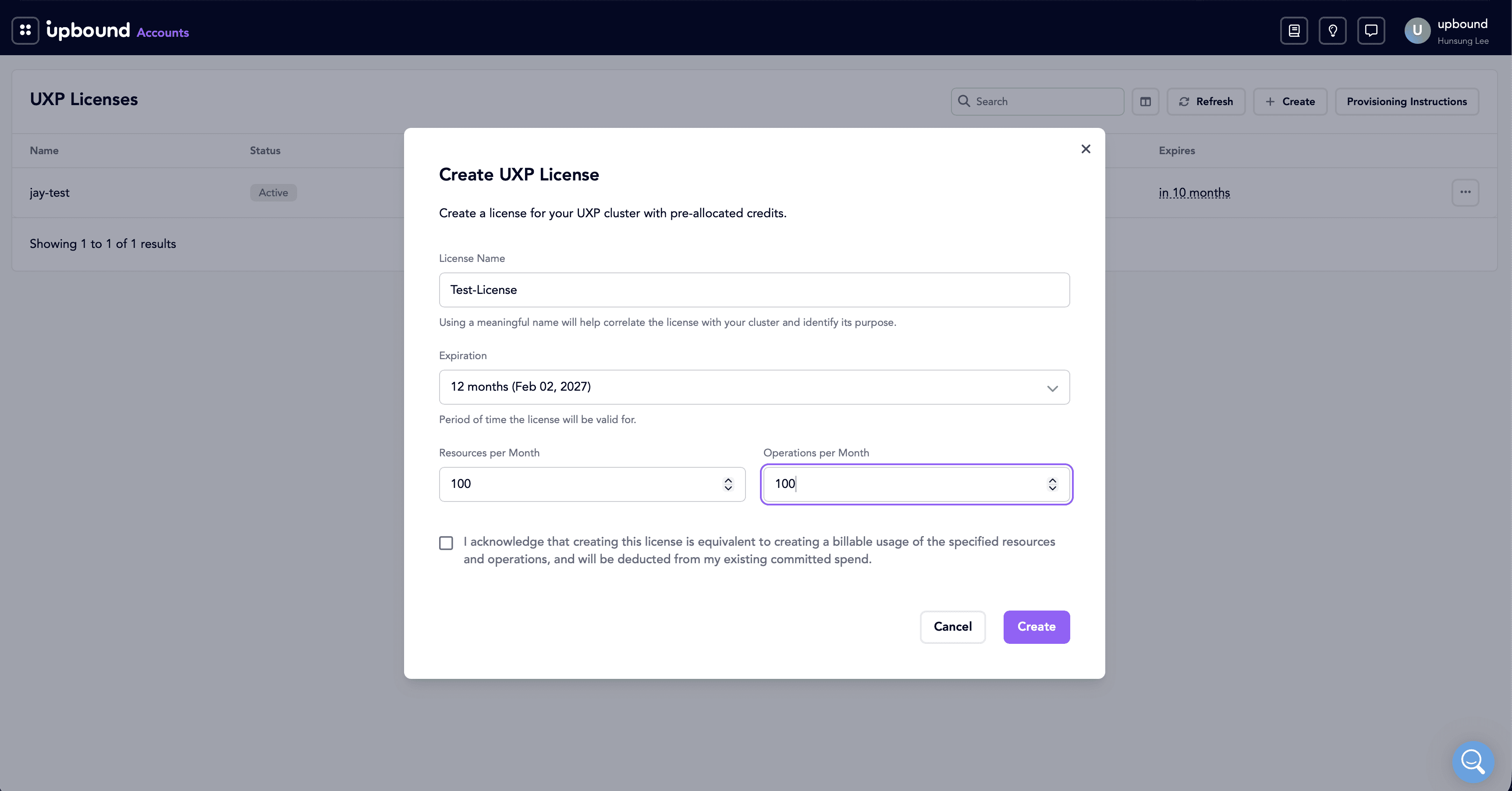
This approach gives enterprises flexibility without sacrificing governance, and it brings licensing into the same operational workflow as the rest of the platform. More detailed instructions can be found in our documentation.
Designed to Scale with You
What ties all of these releases together is intent. The goal was not just to ship features, but to reduce the invisible friction that accumulates as platforms grow, and to ensure the control plane remains predictable, observable, and ready for increasing levels of automation.
Unified navigation reduces context switching
Usage-based pricing aligns cost with value
Self-service upgrades and licensing remove delays
Clear usage visibility builds trust.
Together, these capabilities form the operational foundation required for AI-native infrastructure, where consistent experience, real-time usage signals, and clear cost boundaries are prerequisites for both human operators and AI systems.
Upbound continues to invest in making the platform feel cohesive, predictable, and aligned with how modern infrastructure teams actually work. These recent launches are a foundation for what comes next, and a reflection of our focus on delivering real, measurable value to you, our customers. Get started with Upbound today.
About Authors
Hunsung Lee
Annie Talvasto